Packet loss in Valorant is easily one of the most frustrating things you can deal with. It’s not just simple lag — it’s your agent rubber-banding across the site, bullets straight-up vanishing, and abilities popping off seconds too late. Packet loss happens when data traveling between your PC and Riot's servers gets dropped or shows up out of order. Even a tiny fraction of lost packets can completely throw a round. This guide covers how to spot the symptoms, run quick checks, dive into deep network diagnostics, and know exactly when to stop tweaking because the problem is on Riot's or your ISP's end. If you want to resolve these issues, this Valorant packet loss fix guide will help you troubleshoot effectively.
Before diving in, if you're also chasing better overall performance, check out our Valorant best settings guide. Sometimes combining network tweaks with visual optimizations makes the biggest difference.
Symptoms
Spotting packet loss early saves you from wasting time on the wrong fixes. The issues show up both in how the game feels and what your network graphs are telling you.
Gameplay symptoms to watch for:
- Teleporting / rubber-banding - your agent suddenly snaps backward or jumps forward to where you were a second ago
- Ghost bullets - shots that are clearly on target on your screen register as complete misses
- Delayed ability activation - Sova arrows, Viper walls, and other utility deploy noticeably late
- Amplified peeker's advantage - enemies swing and kill you before they even show up on your screen
- Spike plant / defuse failures - the progress bar finishes but nothing happens, or it randomly resets mid-action
- Unreliable trades - teammates die before you can even react, even if you're holding the angle right next to them
- Movement desynchronization - counter-strafing feels off and tapping heads becomes near-impossible
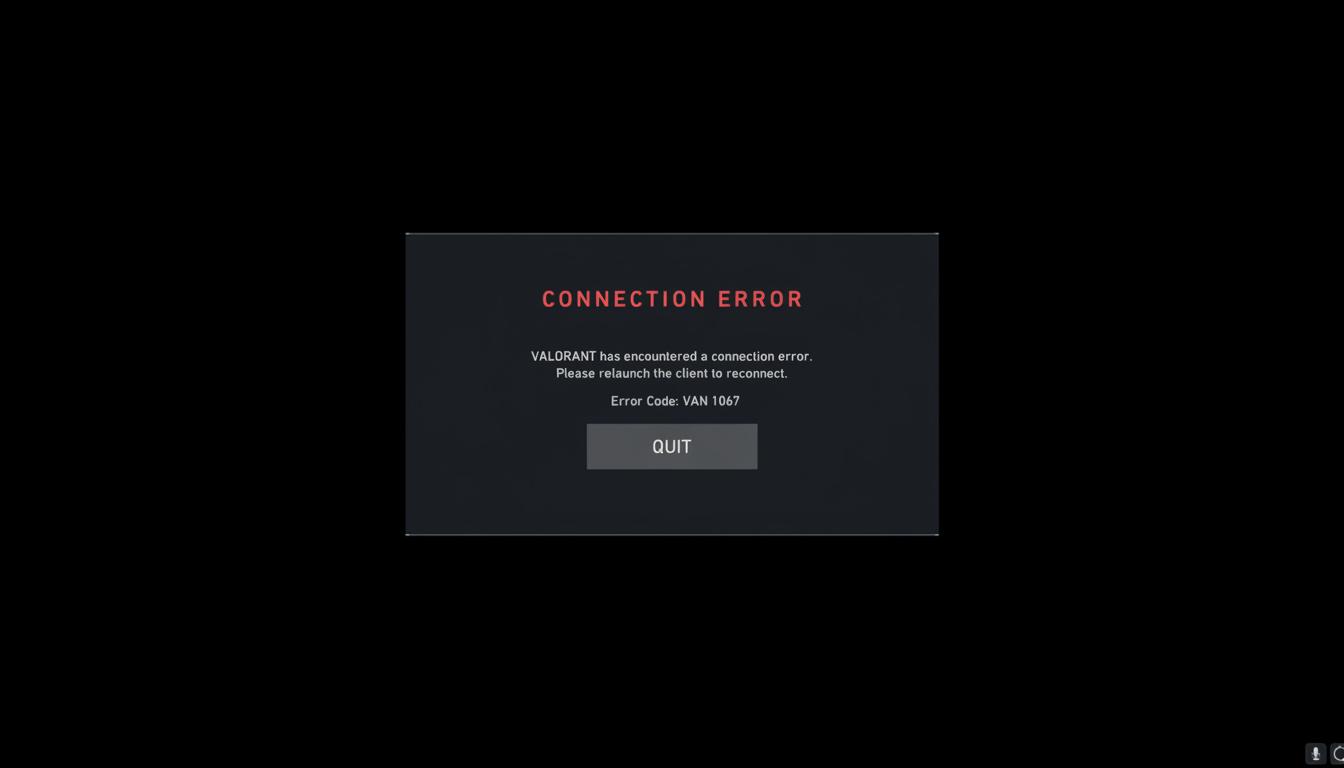
- "Network Problem" warning - the icon in the top-right corner of your HUD keeps flickering or stays red
- Inconsistent spray patterns - Phantom and Vandal recoil behaves differently from shot to shot
- Late ultimate activation - round-ending ults fire way after the critical window has closed
Technical indicators:
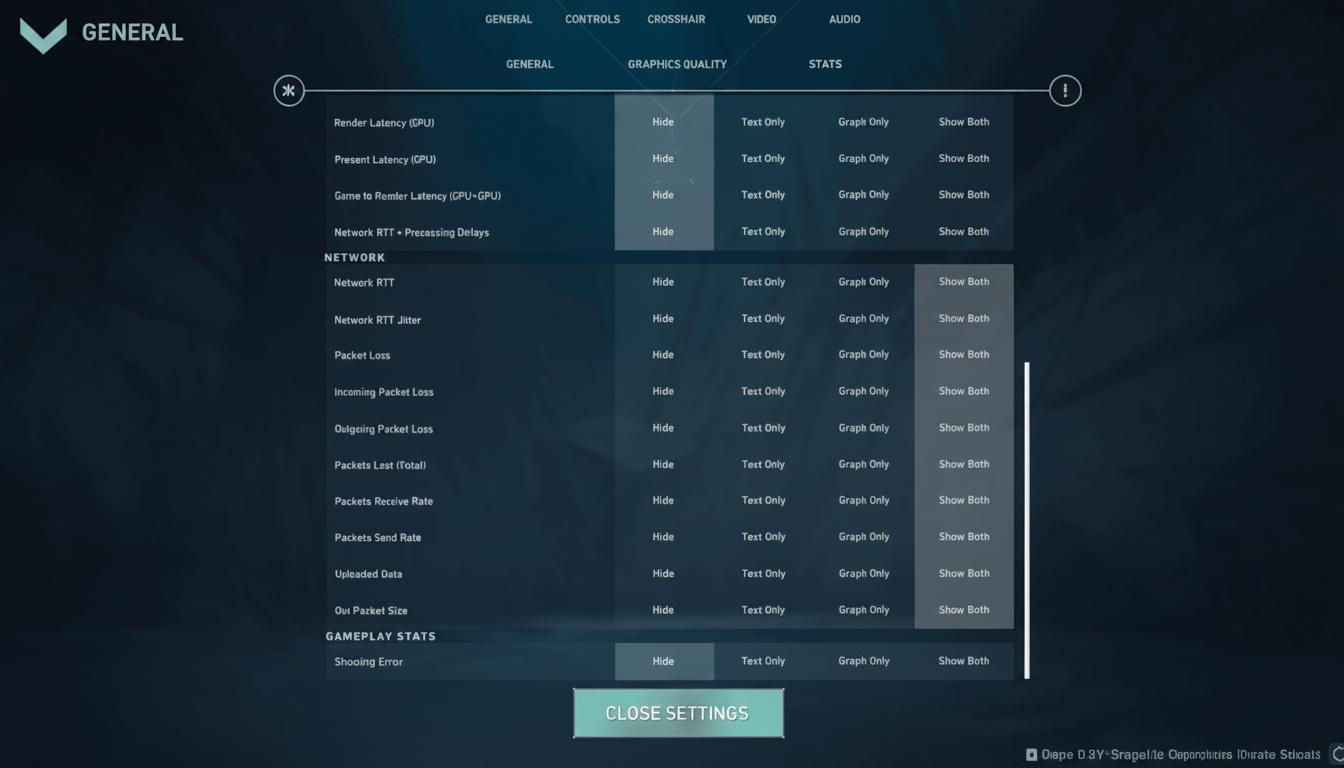
- Head to Settings > Video > Stats > Show All Graphs and turn on: Packet Loss %, Network RTT, Incoming Packet Loss, and Outgoing Packet Loss
- Frequent "Network Problem" or "High Ping" icons popping up in the HUD
- Any reading above 1% packet loss is bad news-even that tiny amount will cause noticeable stuttering
Packet loss doesn't always stay at a flat number. It can spike to 50% for a split second and drop back to zero — that intermittent stutter is just as deadly as constant loss. Also, if the issue only happens in Valorant while other games run perfectly, you're likely dealing with a game-specific routing issue or a client-side bug rather than a dead router.
Check Riot/server status
Before you start messing with your PC settings, make sure Riot's servers aren't actually on fire. Spending an hour tweaking your DNS while the game coordinator is down is a massive waste of time.
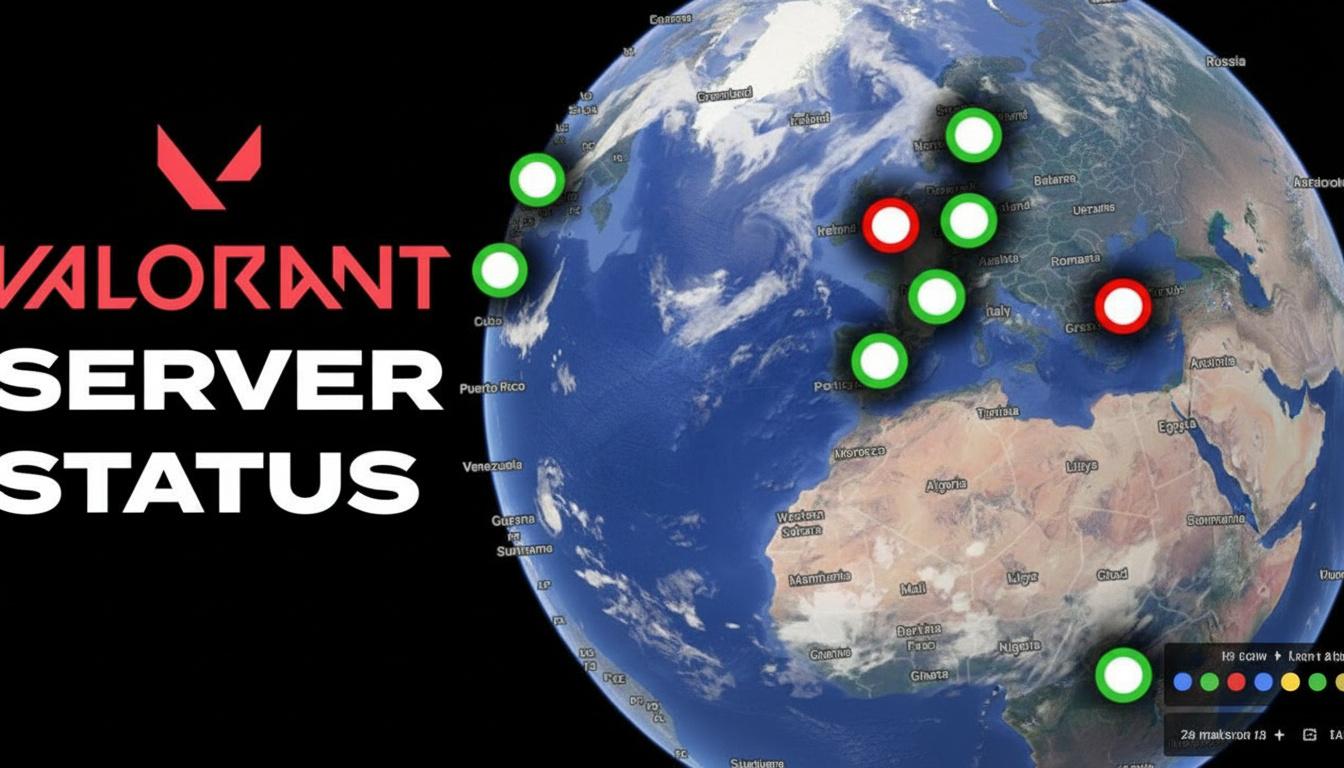
Go check the official Riot Games Service Status page. Look for any active incidents tagged to Valorant-especially mentions of elevated packet loss, high ping, or general connectivity issues in your region. If there's an active alert, nothing you do on your end is going to fix it.
You should also check the in-game server selector. If every single server shows terrible ping or packet loss at the same time, the issue is upstream. A quick search on Reddit or Twitter for "Valorant server status" usually confirms if everyone else is lagging too.
What to do if a server issue is confirmed:
- Stop troubleshooting your local setup
- Close the game and wait for Riot to deploy a fix
- Only test your connection again once the incident is marked resolved
Check local connection
If Riot's servers are green, it's time to look at your own setup. Start with the basics — the simplest fixes usually solve most problems.
Step 1: Restart and baseline
Restarting your PC and router clears out the junk data that builds up over time. Power down your router, wait a full minute, then turn it back on before launching the game.
If you have fiber internet with a separate ONT (fiber box), unplug that box specifically-not just the router. Give it a minute, plug it back in, and let it fully boot up. This resets your connection state and often clears up sudden packet loss.
Step 2: Wired vs. Wi-Fi
This is the single most important change you can make. A wired Ethernet cable completely eliminates radio interference, signal drops, and the instability of wireless channels-which are the main causes of packet loss.
If running a cable isn't an option:
- Switch to the 5GHz band instead of 2.4GHz-it's way less crowded and much more stable for gaming
- Get rid of physical obstacles between your PC and the router
- Upgrade to a high-quality Wi-Fi antenna if your signal strength is constantly dropping
Step 3: Network usage and background apps
Other apps hogging your bandwidth will choke your Valorant packets. Close anything you don't need running while you play.
- Kill these: active downloads, video streams, background browser tabs, cloud sync tools, and automatic game updates
- Limit devices: fewer phones and tablets on the Wi-Fi means less strain on your router
- Disable Delivery Optimization: go to Settings > Windows Update > Advanced options > Delivery Optimization and turn off "Allow downloads from other PCs"
Step 4: Network adapter and drivers
An outdated network driver can quietly tank your connection. Open Device Manager, find your network adapter, right-click it, and select Update driver.
Once updated, go to Properties > Power Management and uncheck "Allow the computer to turn off this device to save power." Then head to the Advanced tab and match these settings:
- ARP Offload - Disabled
- Energy Efficient Ethernet - Disabled
- Green Ethernet - Disabled
- Jumbo Packet / Large Send Offload - Disabled
- TCP/UDP Checksum Offload - Disabled
- Wake on Magic Packet / Wake on Pattern Match - Disabled
- Interrupt Moderation - Disabled (or set to the lowest latency option)
- Receive Buffers - Set to the maximum value your hardware supports
- Transmit Buffers - Set to half of the receive value, or leave on default
- Speed & Duplex - Auto Negotiation (or lock it to your hardware's highest full-duplex speed)
Step 5: Command-line checks
Open Command Prompt as an administrator and run a quick ping test to see where you stand:
ping 1.1.1.1 -n 30
ping 8.8.8.8 -n 30
Watch for any dropped packets or massive jumps in response times. Next, run these cleanup commands to refresh your network stack:
ipconfig /flushdns
ipconfig /release
ipconfig /renew
netsh winsock reset
Flushing your DNS clears out old cached paths that might be sending your traffic the long way around. It's a quick fix that's always worth trying. Just make sure to create a Windows restore point before messing with deeper system settings-search "create a restore point," select your C: drive, and click Create.
Step 6: Firewall and antivirus
Windows Firewall and third-party antivirus software can sometimes block or throttle Valorant traffic without telling you. Add both the Riot Client and the Valorant game binary to your firewall's allowed apps list, making sure both Private and Public boxes are checked.
You can also create dedicated inbound and outbound rules pointing to the Valorant executable, setting them to "Allow the connection" for Domain, Private, and Public profiles. If you use a third-party antivirus, try disabling it temporarily to see if your packet loss disappears.
Step 7: DNS and IP settings
Your DNS server choice affects how quickly your PC finds the path to Riot's servers. Test the latency of the two biggest public options in Command Prompt:
ping 1.1.1.1
ping 8.8.8.8
Go with whichever one gives you the lowest average ping. Set it manually: Control Panel > Network Connections > right-click your adapter > Properties > Internet Protocol Version 4 > Properties > Use the following DNS server addresses.
- Cloudflare (usually faster): Preferred 1.1.1.1 / Alternate 1.0.0.1
- Google: Preferred 8.8.8.8 / Alternate 8.8.4.4
It is also worth disabling IPv6 in your adapter properties. IPv6 routing can cause weird ping spikes that look exactly like packet loss, and turning it off has fixed severe connection issues for plenty of players.
Step 8: Advanced Windows tweaks
These tweaks stop Windows from hogging your bandwidth in the background:
- TCP Optimizer (run as Admin): set your connection speed slider and select "Optimal" to automatically tune your TCP settings
- Group Policy Editor (gpedit.msc): go to Computer Configuration > Administrative Templates > Network > QoS Packet Scheduler > "Limit reservable bandwidth" and set it to 0%
- Startup apps and services: open Task Manager > Startup and disable apps you don't need opening automatically. Then run
msconfig, go to Services, check "Hide all Microsoft services," and disable useless third-party bloat like RGB software or updater services
Step 9: In-depth diagnostics
If you're still lagging after all of this, you need to find out exactly where the connection is breaking. Download WinMTR and run it against your Valorant server's IP for about 10 to 15 minutes while you're playing.
How to read the results:
- Hops 1-2 - Local network or router issue (usually means your Wi-Fi is dropping packets)
- Hops 3-8 - Your ISP is routing your traffic poorly
- Hop 9 and beyond - The issue is on Riot's or AWS's end
- Any hop with >1% loss - That specific node is where your packets are dying
If the packet loss only shows up in Valorant and nowhere else, it's likely a routing issue specific to Riot's network or Vanguard acting up, rather than your actual internet connection.
In-game network settings
Valorant has built-in settings that change how the game handles a shaky connection. These aren't just for show-they directly change how the game buffers data.
| Setting | Location | Recommended Value | Effect/Notes |
|---|---|---|---|
| Network Buffering | Settings > General | Minimum (default) | Lowest input delay; switch to Moderate or Maximum if you are lagging |
| Show Network Stats | Settings > Video > Stats | On - Show All Graphs | Keeps a real-time eye on ping, packet loss, and FPS |
| Limit FPS Always | Settings > Video | On - set to 60-128 FPS | Reduces how often your PC talks to the server; try 60 if loss is bad |
| V-Sync | Settings > Video | Off | Turn off to avoid input lag |
| Client FPS | Settings > Video > Stats | On | Helps you see if FPS drops are mimicking network lag |
| Incoming/Outgoing Packet Loss Graphs | Settings > Video > Stats | On | Shows if you are dropping packets sending data, receiving it, or both |
Network Buffering is the big one here. Minimum keeps your input delay as low as possible, which is what you want. But if you're constantly teleporting around due to packet loss, switching this to Moderate or Maximum adds a buffer that smooths out the movement at the cost of about 30-50ms of input delay. It's a decent temporary fix while you find the real issue.
Capping your FPS is another solid workaround. High frame rates force your PC to send updates to the server more frequently. If your connection is struggling, capping your FPS reduces that data load, which can instantly lower packet loss-especially on older routers or busy home networks.
Keep both the incoming and outgoing packet loss graphs visible. If you're only losing packets in one direction, it tells you whether the issue is your PC sending data (outgoing) or your router receiving it (incoming), which helps narrow down the fix.
Router and ISP steps
If local PC tweaks didn't do the trick, the bottleneck is likely your router or your internet service provider.
Step 1: Router basics
Do a proper power cycle: unplug your router from the wall for 30 seconds, then plug it back in. This clears the router's cache and forces a clean connection to your ISP.
- Keep your router out in the open, away from walls, microwaves, and metal objects that block signals
- Make sure you're using at least a Cat5e Ethernet cable-older cables degrade over time and cause physical packet loss
Step 2: Wi-Fi optimization
If you absolutely cannot run an Ethernet cable, make sure your wireless setup is optimized. The 2.4GHz band is incredibly crowded in most neighborhoods, so move your gaming PC to the 5GHz band.
- Kick other devices off the Wi-Fi when you're trying to play competitive matches
- Log into your router's settings page and check for any available firmware updates
Step 3: Quality of Service (QoS)
QoS tells your router to prioritize gaming traffic over someone else streaming movies in the next room. Log into your router's admin panel (usually 192.168.1.1 or 192.168.0.1), find the QoS settings, and set your gaming PC as the highest priority device.
Step 4: Port forwarding
Port forwarding won't necessarily lower your ping, but it can fix strict NAT issues and packet drops. Forward these ports for Valorant:
| Protocol | Port Range | Service |
|---|---|---|
| TCP | 2099 | Party & In-Game Chat |
| TCP | 5222-5223 | Riot Client Login & Matchmaking |
| UDP | 7000-8000 | Core Gameplay Traffic |
| UDP | 8180-8181 | Game State Updates |
| UDP | 3478-3480 | Voice Chat (STUN/TURN) |
| TCP | 8393-8400 | Riot Client Services |
| TCP | 80, 443 | Patches & Web Traffic |
Remember to reboot your router after saving these rules.
Step 5: ISP troubleshooting
Run a WinMTR test or a traceroute to the Valorant server IP while you are actively lagging. This log is your proof when you contact your ISP.
When you call support, ask to speak directly with Tier 2 network engineering-the front-line agents usually don't have the tools to fix routing or peering issues. Show them your WinMTR logs and ask if they can optimize your routing path or assign you a static IP.
If your ISP can't or won't fix the path, a gaming VPN like ExitLag is worth trying. These services bypass your ISP's bad routing and send your data through optimized paths directly to Riot's servers. Just keep in mind they only help if the issue is ISP routing-they can't fix a server that is lagging on Riot's end. You can read more about how this works on the official VALORANT Network Instability Basics page.
When it is not your fault
Sometimes you can optimize every single setting perfectly and still lag. Recognizing when the problem is out of your hands saves you a lot of headaches.
Signs the issue is not on your end:
- Other players in your lobby or region are complaining about the exact same lag
- Your WinMTR test shows packet loss happening at hops owned by Riot or AWS, not your ISP
- You've tried Ethernet, updated drivers, reset your router, and nothing changed
- The packet loss only happens during peak evening hours (classic ISP congestion)
- Riot's status page has an active warning up
When this happens, stop messing with your settings. The issue is upstream, and you just have to wait it out.
What you can do instead:
- Open a ticket with Riot Support and attach your WinMTR logs so their network team can look into the peering issue
- Send those same logs to your ISP so they know their routing to Riot's servers is broken
- Swap to a different server region in the lobby menu if another nearby server has a cleaner route
- Use a routing tool or VPN to bypass the broken ISP node, provided the issue isn't on Riot's actual server hardware
If your traceroute shows packets dropping at the final Riot or AWS hops, the issue is entirely out of your control. No amount of local tweaking is going to fix a server node that is hundreds of miles away. Take a break and let Riot patch it.
Related performance guides